
Treatments
FDA-approved treatments for early Alzheimer's disease
Leqembi and Kisunla are FDA-approved infusion treatments shown to slow the progression of Alzheimer's disease, not just treat its symptoms. In clinical trials they slowed decline for some patients but they are not a cure, they carry risks, and they are not right for everyone. We help you understand all of it.
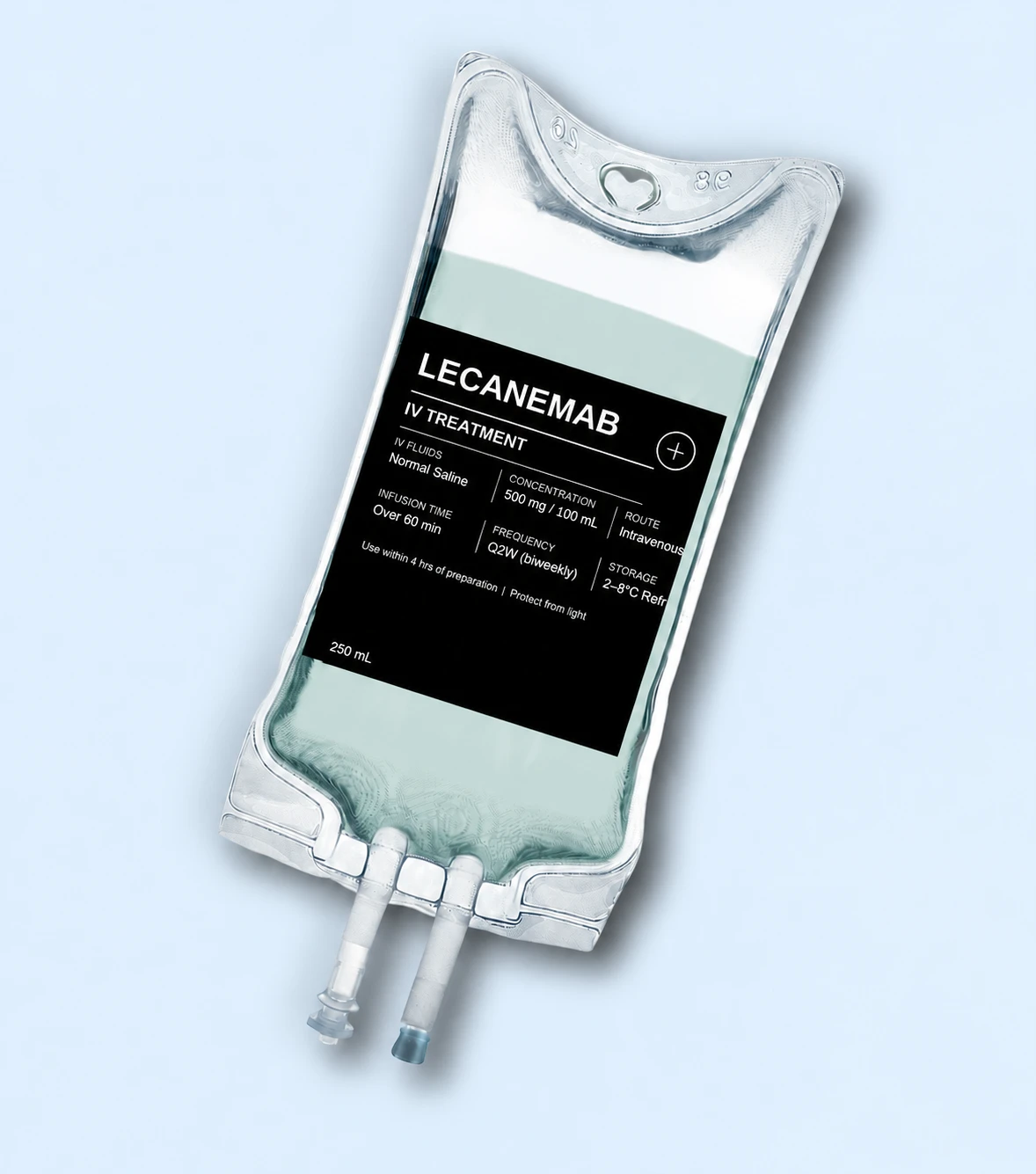
Drug information
Leqembi and Kisunla, side by side.
Leqembilecanemab-irmb
Kisunladonanemab-azbt
Route
LeqembiIV infusion every two weeks; can transition to a once-weekly at-home injection after 18 months
KisunlaIV infusion every four weeks
MRI monitoring
LeqembiBaseline during your workup and before your 3rd, 5th, 7th, and 14th infusions
KisunlaBaseline during your workup and before your 2nd, 3rd, 4th, 7th, and 13th infusions
Duration
LeqembiCan stop once amyloid reaches minimal levels on a PET scan
KisunlaCan stop once amyloid reaches minimal levels on a PET scan
ARIA risk
LeqembiThe ARIA-E risk was 13% vs 2% on placebo; The ARIA-H was 17% vs 9% on placebo
KisunlaThe ARIA-E risk was 24% vs 2% on placebo; The ARIA-H was 31% vs 13% on placebo
This information is from the primary trials performed with these medications and the pharmaceutical manufacturers directly. Most ARIA in the trials was asymptomatic and found on routine MRI, with the caveat that these were separate trials, not a head-to-head comparison. Prescribing information, monitoring schedules, and payer rules can change. This comparison is general information, not a recommendation.
What to expect, honestly
In clinical trials, both treatments showed a real, moderate slowing of cognitive decline. Neither is a cure and neither reverses symptoms already present. The goal is to weigh the potential benefits and risks clearly with our neurology specialists and decide what works best for you.
Safety
The safety screen is part of the evaluation, not an afterthought.
Risks and monitoring are reviewed before any treatment decision. Urgent symptoms belong with emergency care.
Qualification
Who is most likely to qualify.
We help adults with Alzheimer's disease, and their families, who want to understand whether disease-modifying treatment is an option.
You are located in Maryland or Virginia.
A family member or care partner can participate in planning when needed.
There is a diagnosis already, or cognitive changes serious enough to justify specialist review.
You are looking for an answer on infusion treatment-readiness, not purely general memory-care advice.
You can complete virtual visits and labs/imaging testing and treatment locally in person, as appropriate.
Ready to meet with a Neurologist?
Book a video visit with a board-certified neurologist. Insurance accepted, including Medicare.